Nextday Peptides: Coa Library For Research Study Peptides
How To Check Out A Certification Of Evaluation Coa For Peptide Research Study
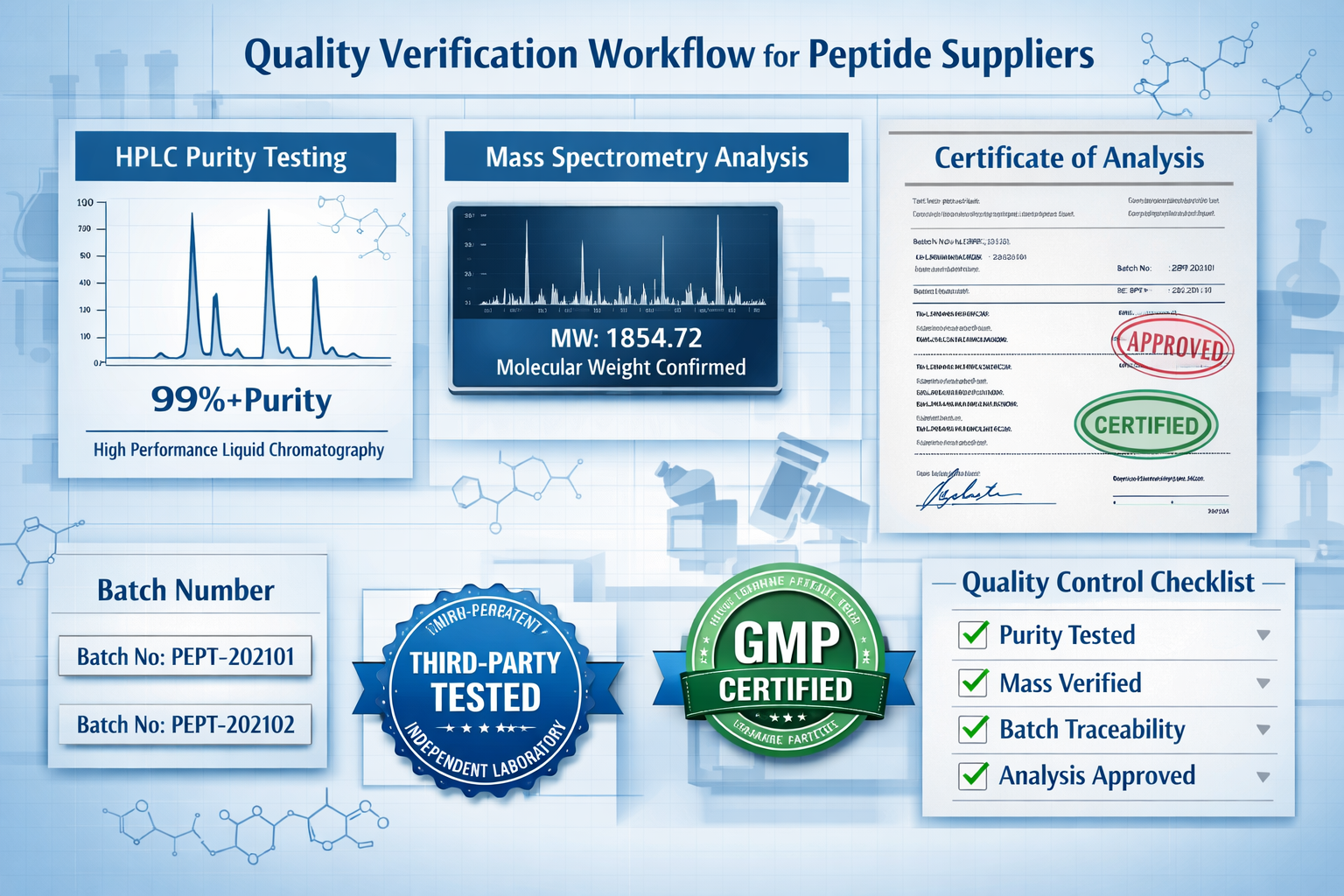
When buyers review an HPLC outcome, they generally focus first on the reported purity worth. A greater percent may recommend that the major height represents the majority of the sample, but that number ought to always read together with the rest of the file. Pureness information is better when it is clearly connected to a particular set and presented in a complete, readable layout. COAs additionally matter due to the fact that they support traceability from one batch to an additional. If a peptide item consists of a batch or great deal number that matches the documentation, customers can better comprehend whether the data in fact belongs to that item.Coas & Screening (How To Read A Coa)
HPLC is a fundamental part of a COA, but it is normally strongest when incorporated with other batch-specific logical details. A peptide COA can be an important component of the sourcing procedure when it is clear, batch-specific, and easy to interpret. Customers need to evaluate the peptide name, batch number, examination date, reported techniques, and supporting logical details before relying on the file as component of a buying choice.
Warning Signs In Certifications Of Evaluation
This assures that the item is devoid of unwanted contaminants that could disrupt research study searchings for. Furthermore, solubility and stability information are offered, using clear guidelines on optimum storage and handling conditions. Lastly, to strengthen credibility, all COAs are backed by independent third-party confirmation, making certain full accuracy and conformity with research laboratory standards. LC-MS, or Fluid Chromatography-Mass Spectrometry, includes an additional layer of logical detail to peptide paperwork. While HPLC is frequently utilized to report pureness, LC-MS is frequently utilized to help confirm whether the identified substance follows the anticipated molecular weight of the peptide being assessed. For buyers evaluating a COA, this makes LC-MS specifically valuable when identification issues, not just pureness.- A percent on its own can be beneficial, but buyers need to constantly read it in context.
- Picking vendors that prioritise batch-specific documentation and independent verification supports reputable, reproducible study results.
- Reputable laboratories maintain screening documents and can confirm authenticity when offered with batch numbers and screening days.
- When collaborating with products such as peptides, researchers depend upon the CoA to understand what's been evaluated and how.
- Nextday Peptides offers a varied variety of peptides customized to numerous research requirements.
Bewaring with these details stays clear of confusion in the center of the study procedure. For labs that routinely handle several sets, understanding exactly how to check out a CoA rapidly and accurately is necessary. These areas make use of some technical terms, but a lot of comply with the exact same general layout. The details located in a peptide CoA often start with just how the product is evaluated.
Legitimate testing generates thorough documents; selective omission of common parameters suggests feasible quality concerns being hidden. Contrast COA format and material across multiple batches from the very same distributor. Constant format recommends established quality control procedures, while significant variations in between files may indicate manufacture.By buying, you agree that you are a certified scientist which items will be used solely for in-vitro research objectives. Premium study peptides and substances for clinical research. Luxury Peptide items are sold purely for research laboratory research study usage only. As the compounds leave the column, detectors determine HPLC Testing the existence of each component. The outcome of this procedure is generally displayed as a chromatogram, which is a graph revealing peaks representing spotted particles. HPLC is a logical technique utilized to different chemical elements within a sample.